Introduction
Road accidents remain one of the leading causes of injury and death worldwide. With increasing numbers of vehicles, pedestrians, and cyclists sharing the same roads, ensuring safety has become a complex challenge. Traditional traffic monitoring systems rely heavily on human observation and basic sensors, which are often limited in speed, accuracy, and scalability. This is where object detection, a core technology in artificial intelligence and computer vision, is transforming how we understand and manage road environments.
Object detection enables machines to visually identify and locate different objects within an image or video stream. When applied to road safety, it allows traffic systems, surveillance cameras, and autonomous vehicles to recognize cars, pedestrians, traffic signs, bicycles, and many other elements in real time. By doing so, it creates opportunities to reduce accidents, improve traffic flow, and support smarter transportation systems.
What Is Object Detection?
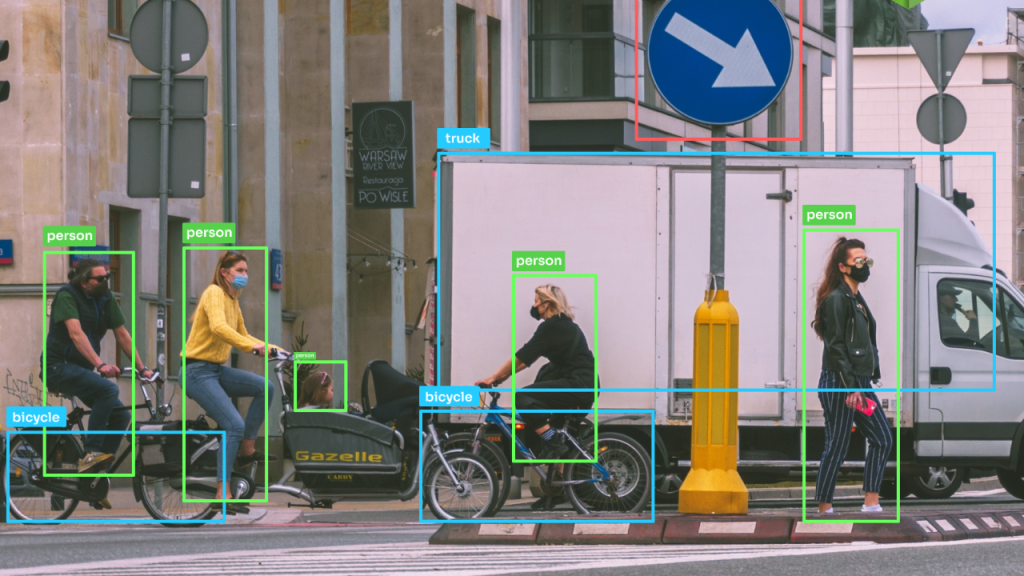
Object detection is a branch of computer vision that allows a computer to not only see an image but also understand what is inside it. Unlike simple image classification, which tells you what an image contains as a whole, object detection identifies multiple objects, draws boundaries around them, and labels each one.
For example, in a street image, an object detection system can recognize:
- Cars
- Buses and trucks
- Pedestrians
- Cyclists
- Traffic lights
- Road signs
Modern object detection systems use deep learning models such as YOLO (You Only Look Once), Faster R-CNN, and SSD (Single Shot Detector). These models are trained on large datasets containing millions of labeled images so they can learn how different objects appear under various lighting, weather, and camera angles.
Once trained, the model can process video frames from a camera and instantly detect and locate road users and infrastructure in real time.
How Object Detection Works in Road Safety
When object detection is deployed for road safety, it usually follows a simple but powerful pipeline:
Image or video capture: Cameras mounted on traffic poles, intersections, vehicles, or drones capture live footage.
AI processing: The object detection model analyzes each frame to identify and locate objects.
Classification and tracking: Detected objects are labeled (for example, “car” or “pedestrian”) and tracked across frames.
Decision or alert: The system triggers actions such as warnings, traffic signal changes, or data logging.
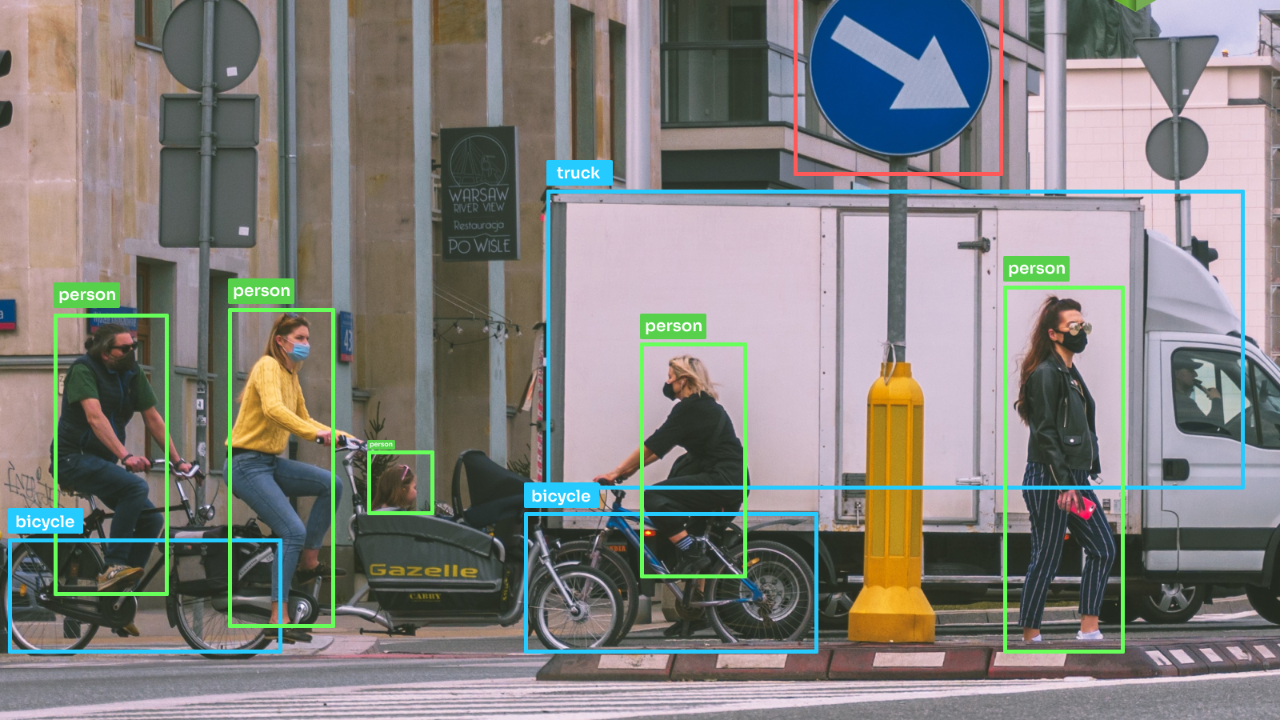
Using this approach, object detection becomes the eyes of intelligent traffic and safety systems.
Applications of Object Detection in Road Safety
1. Pedestrian and Cyclist Protection
Object detection systems can identify pedestrians and cyclists near or on the road. When integrated with traffic lights or vehicle safety systems, this allows automatic alerts or braking when someone unexpectedly crosses the road.
2. Traffic Monitoring and Congestion Control
By counting and classifying vehicles, object detection helps traffic authorities understand congestion patterns. Traffic lights can be dynamically adjusted based on real-time vehicle flow, reducing waiting times and improving road efficiency.
3. Accident Prevention
When a system detects risky situations such as vehicles running red lights, illegal U-turns, or sudden stops, it can alert traffic operators or even trigger automated warnings to drivers.
4. Smart Surveillance
AI-powered cameras can detect accidents, stalled vehicles, or dangerous behavior much faster than human operators, enabling quicker emergency response.
5. Support for Autonomous and Assisted Driving
Modern vehicles rely heavily on object detection to recognize lanes, other cars, pedestrians, and obstacles, making driving safer and more reliable.
Benefits of Object Detection for Road Safety
1. Real-Time Awareness
Object detection works in real time, allowing systems to respond immediately to dangerous situations instead of reacting after an accident occurs.
2. Improved Accuracy
AI systems can monitor multiple locations at once and do not suffer from fatigue or distraction, making them more consistent than human observers.
3. Data-Driven Decisions
The data collected from object detection systems helps city planners understand traffic patterns, accident hotspots, and infrastructure needs.
4. Reduced Accidents
By detecting hazards early and enabling faster responses, object detection contributes directly to lowering accident rates.
5. Scalability
Once installed, AI-based systems can be expanded to cover more roads and intersections without requiring proportional increases in human staff.
Limitations of Object Detection in Road Safety
While object detection is powerful, it is not perfect and must be used with care.
1. Sensitivity to Weather and Lighting
Rain, fog, snow, and low light conditions can reduce camera visibility and affect detection accuracy. Objects may become harder to recognize in poor weather.
2. Detection Errors
False positives (detecting something that is not there) and false negatives (missing a real object) can occur, which may lead to incorrect decisions.
3. High Setup and Maintenance Costs
Installing high-quality cameras, computing hardware, and AI software requires significant investment, especially for large cities.
4. Privacy Concerns
Because object detection relies on cameras, it raises concerns about surveillance and personal privacy if not properly regulated.
5. Dependence on Data Quality
The performance of object detection systems depends heavily on the quality and diversity of the data used to train them.
Pros and Cons of Using Object Detection for Road Safety
Pros
- Enhances pedestrian and driver safety
- Provides continuous, real-time monitoring
- Reduces human error
- Enables smart traffic management
- Supports autonomous and assisted driving technologies
Cons
- Performance can drop in bad weather or low visibility
- Initial deployment is expensive
- Requires strong data security and privacy policies
- Not 100% accurate in complex traffic scenarios
The Future of Object Detection in Transportation
As computing power increases and AI models become more sophisticated, object detection will become even more accurate and reliable. Combined with technologies such as 5G, edge computing, and smart infrastructure, it will enable fully connected road networks that react instantly to changing conditions.
In the future, cities will rely on object detection not only to prevent accidents but also to design safer roads, optimize traffic, and support the widespread use of autonomous vehicles.
Conclusion
Object detection is a foundational technology in modern road safety systems. By allowing machines to see and understand what is happening on the road, it enables faster responses, smarter traffic management, and safer journeys for everyone. Although it has limitations related to cost, weather, and data quality, its benefits far outweigh its challenges when implemented responsibly.
As urban areas grow and transportation becomes more complex, object detection will continue to play a crucial role in making roads safer, more efficient, and more intelligent.